


 Location
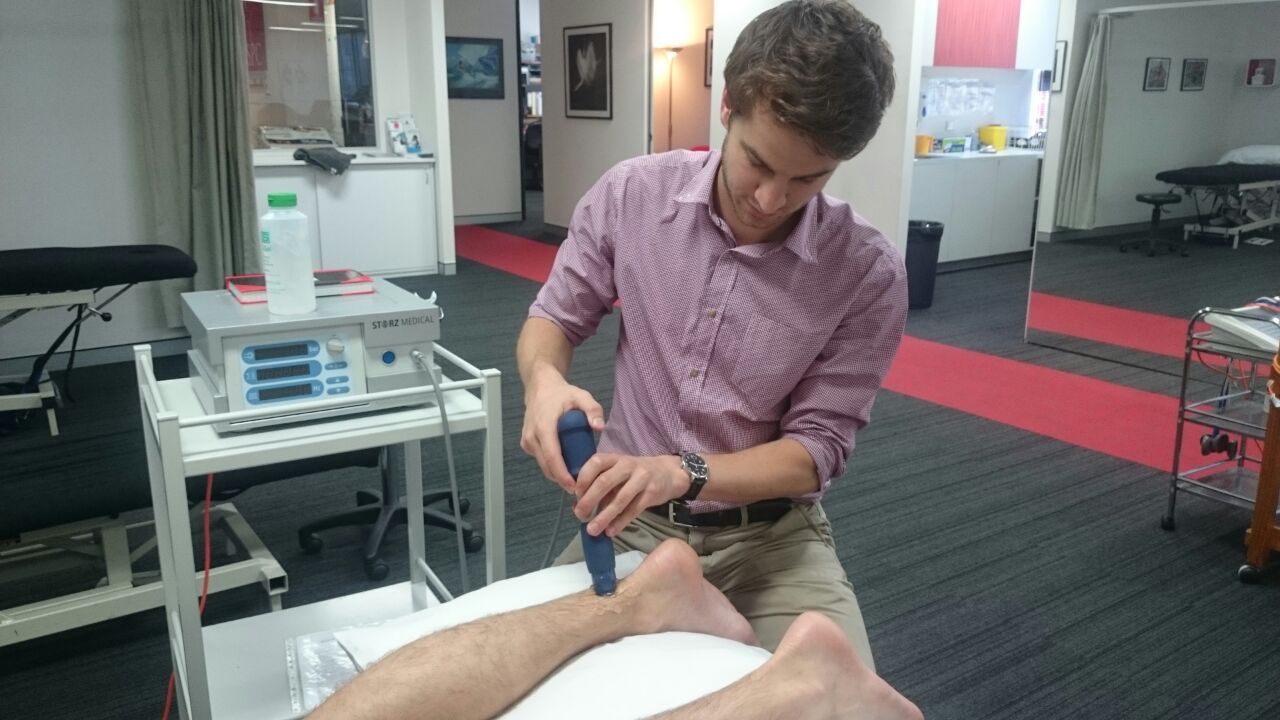
What is Extracorporeal Shock Wave Therapy?
Extracorporeal or Radial ShockWave Therapy has been used for treatment of musculoskeletal conditions, particularly tendinopathies, since the early 1990s. Originating from a urology procedure called lithotripsy (used to treat kidney stones), it is a safe and non-invasive therapy.
ECSWT has shown evidence in promoting pain relief and also tendon remodeling/ regeneration.
What is involved?
Radial Shockwaves are transmitted to the site of injury via a hand-piece held by the clinician. Treatment over the area of injury may cause some initial discomfort. It is not uncommon for patients to develop numbness or heaviness in this area at the time of treatment.
Each treatment will take approximately 10 minutes and 2000-3000 pulsed shockwaves will be administered to the area of concern. Patients typically need 3-5 treatments (once a week), though improvement can be achieved after a single treatment.
Contra-indications
Whilst very safe, shockwave therapy is contra-indicated in the following conditions
- Pregnancy
- Bleeding disorders
- Warfarin therapy
- Tumors
- Local inflammation/wound
Evidence
Scientific research supports the use of shockwave therapy in the treatment of tendinopathy, plantar fasciitis and other conditions. Evidence suggests that up to 80% of patients with appropriate injuries will improve with shockwave therapy.
Research Articles
Rompe et al (2008) Eccentric loading compared with shock wave treatment for chronic insertional achilles tendinopathy. J Bone Joint Surg Am, 90:52-61
Han et al (2009) Effect of extracorporeal shock wave therapy on cultured tenocytes, foot and ankle
International. 30:93-98
Furia et al (2007) Extracorporeal shock wave therapy in the treatment of chronic plantar fasciitis and Achilles tendinopathy. Current Opin Orthop, 18:101-111

 Sports Physiotherapy
 Videos


